Legal Action Against Viral or Leaked Videos in Pakistan
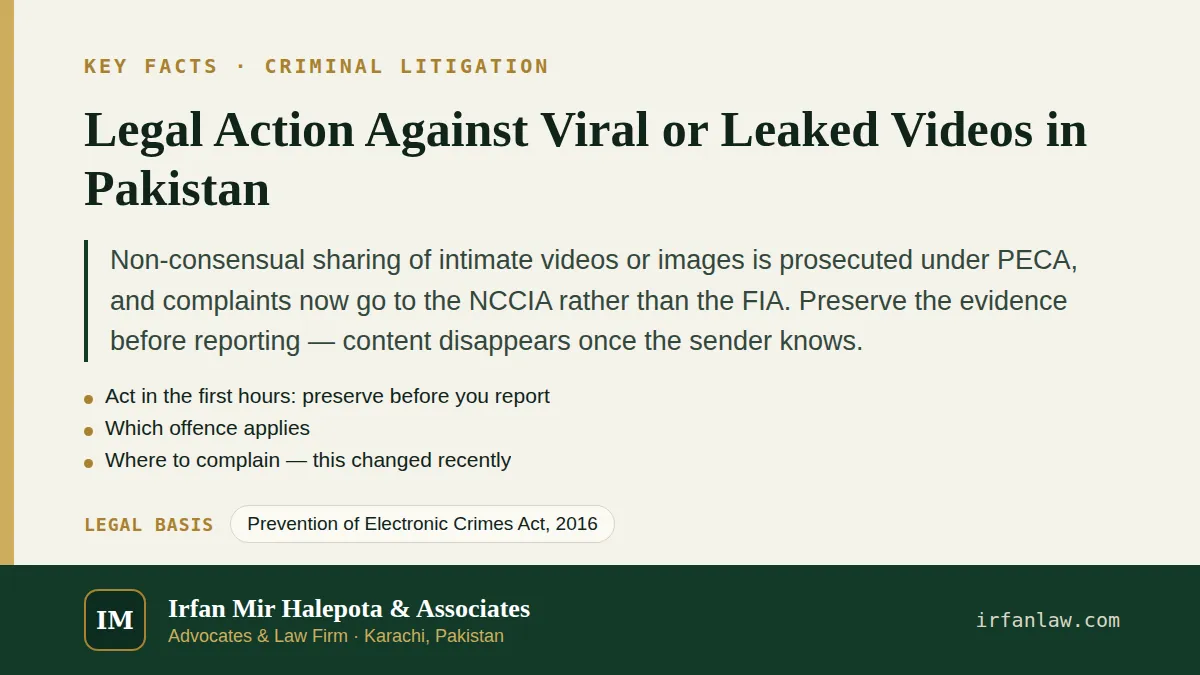
Non-consensual sharing of intimate videos or images is prosecuted under PECA, and complaints now go to the NCCIA rather than the FIA. Preserve the evidence before reporting — content disappears once the sender knows.
A video or image circulating without consent — whether recorded privately, taken from a phone, edited, or generated — is one of the most distressing situations a person can face, and one of the most urgent. The material spreads while you decide what to do. The law provides real remedies, and speed matters more here than in almost any other proceeding. Anyone searching for the best cyber crime lawyer in Karachi after a video is leaked needs to act on evidence preservation before filing anything.
Act in the first hours: preserve before you report
Do this before the person responsible knows a complaint is coming, because accounts get deleted and content disappears:
- Capture URLs, account handles, profile identifiers, timestamps and message metadata — not screenshots alone
- Use the platform’s own data-export function where available; exported records retain metadata that images do not
- Do not crop, edit or annotate originals — keep them untouched and work from copies
- Preserve the device the material arrived on
- Note every place you have seen it posted, including groups and private channels
This work can be done by counsel or a trusted person. Repeatedly viewing the material is not a legal requirement.
Which offence applies
Non-consensual sharing of intimate images and videos is prosecuted under the Prevention of Electronic Crimes Act, 2016 (PECA), which covers offences against the modesty of a natural person and minors, offences against dignity, cyberstalking, and unauthorised access where an account or device was compromised. Where the material was used to extract money or compliance, blackmail and extortion provisions of the Pakistan Penal Code also engage.
The specific section invoked determines what must be proved, so it is worth getting right at the complaint stage rather than arguing later. Note also that PECA was amended in 2025 and provisions were renumbered — confirm the current section rather than relying on older guidance.
Where to complain — this changed recently
Complaints no longer go to the FIA Cyber Crime Wing. The National Cyber Crime Investigation Agency (NCCIA) now holds exclusive investigative jurisdiction over cybercrime under the amended Section 30 of PECA. The old FIA cybercrime helpline is not active for these matters, and a complaint sent there may never reach an investigating authority.
Complaints require CNIC verification, so anonymous reporting is not available — but PECA contains confidentiality provisions protecting a victim’s identity from public disclosure in appropriate cases.
Getting the content removed
Investigation and removal are separate tracks, and both should run at once:
- Platform reporting — most major platforms have expedited channels for non-consensual intimate imagery and generally act faster than any legal process
- Regulatory blocking — the Pakistan Telecommunication Authority can direct removal or blocking of unlawful online content
- Court order — where a platform or host will not act voluntarily
If the video is fake or AI-generated
Fabricated and AI-manipulated material is now a substantial share of these cases. It is not outside the law because it is not genuine: circulating fabricated intimate content still engages the dignity and modesty provisions of PECA, and the 2025 amendments added a specific offence relating to intentional dissemination of false information. Forensic evidence of manipulation strengthens rather than weakens such a complaint.
Civil remedies alongside the criminal complaint
A criminal complaint punishes; it does not by itself compensate or restrain. Depending on the facts, a civil suit for damages for defamation and injury to reputation, and an injunction restraining further publication, may run in parallel. Where the person responsible is known and traceable, this route is often the one that produces the fastest practical restraint.
If you are accused
These provisions are also deployed in family disputes, break-ups and business quarrels, and material taken out of context can look very different in a complaint than in the exchange it came from. If you receive an NCCIA notice, obtain advice before responding and consider whether pre-arrest bail is appropriate.
A note on what victims are often told
Families frequently advise silence, on the theory that a complaint draws attention. In practice, the material rarely disappears on its own, blackmail demands escalate when they succeed, and delay destroys the evidence a case depends on. The law treats the person who shared the material as the wrongdoer — not the person in it.
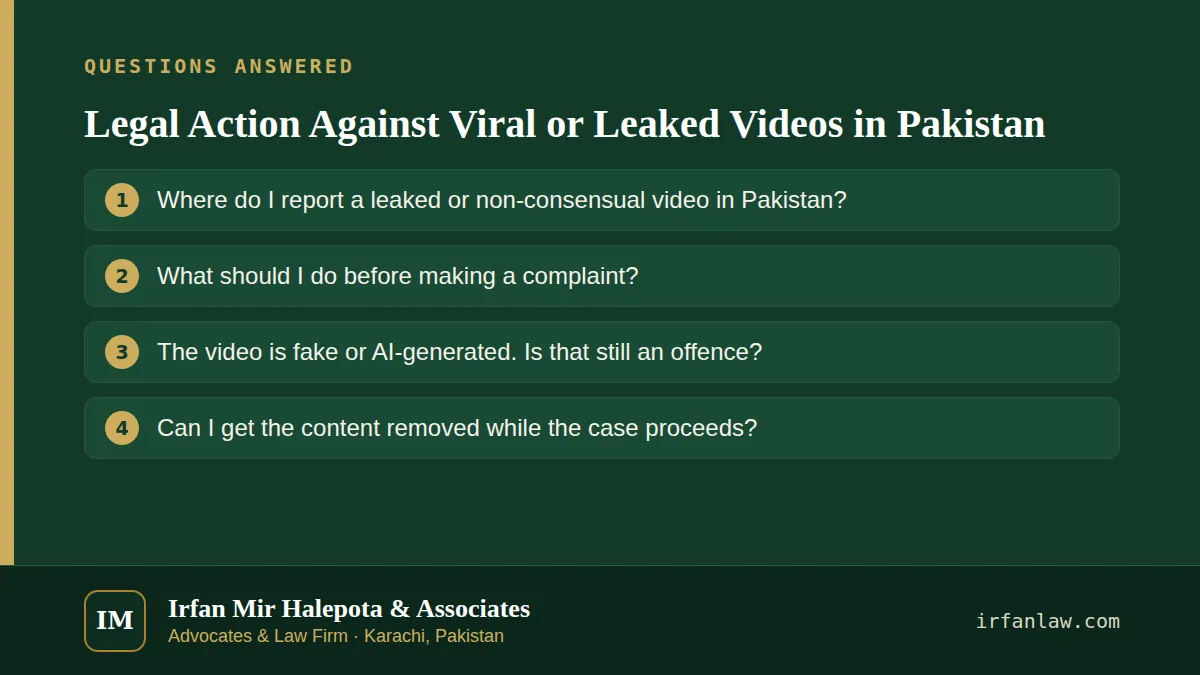
Common questions
Where do I report a leaked or non-consensual video in Pakistan?
To the National Cyber Crime Investigation Agency (NCCIA), which now holds exclusive investigative jurisdiction over cybercrime under the amended Section 30 of PECA. The FIA Cyber Crime Wing no longer handles these matters, and the old FIA helpline is not active for them.
What should I do before making a complaint?
Preserve evidence first, before the person responsible knows a complaint is coming. Capture URLs, account handles, profile identifiers, timestamps and message metadata rather than screenshots alone, use the platform's data-export function where available, and keep originals unedited. Content disappears once someone suspects they have been reported.
The video is fake or AI-generated. Is that still an offence?
Yes. Fabricated or AI-manipulated intimate content is not outside the law because it is not genuine — it still engages the dignity and modesty provisions of PECA, and the 2025 amendments added a specific offence relating to intentional dissemination of false information. Forensic evidence of manipulation strengthens such a complaint.
Can I get the content removed while the case proceeds?
Yes, and removal should run in parallel with the complaint rather than after it. Platform reporting channels for non-consensual intimate imagery are usually fastest, the Pakistan Telecommunication Authority can direct removal or blocking, and a court order is available where a host will not act voluntarily.
Follow us on Google
If these guides are useful, add this site as a preferred source. Google will then show it more prominently to you in Search, Discover and AI results.
This article is general information about Pakistani law and procedure, not legal advice for any specific matter. If this touches on something you're currently facing, get in touch and we'll advise on your facts directly.