Tenant Rights in Karachi: What Landlords Can and Can't Do Under the Sindh Rented Premises Ordinance
Eviction in Karachi isn't a matter of a landlord's say-so — it runs through a defined legal process with limited grounds. Here's what tenants should know.
A surprising number of tenants in Karachi assume a landlord can simply ask them to leave and, if they don't, have them removed. That isn't how eviction works under the Sindh Rented Premises Ordinance, 1979 (SRPO) — and knowing the actual process protects tenants from being pressured into leaving prematurely. Tenants and landlords searching for the best property lawyer in Karachi for a rent dispute both need to understand eviction runs through the Rent Controller only.
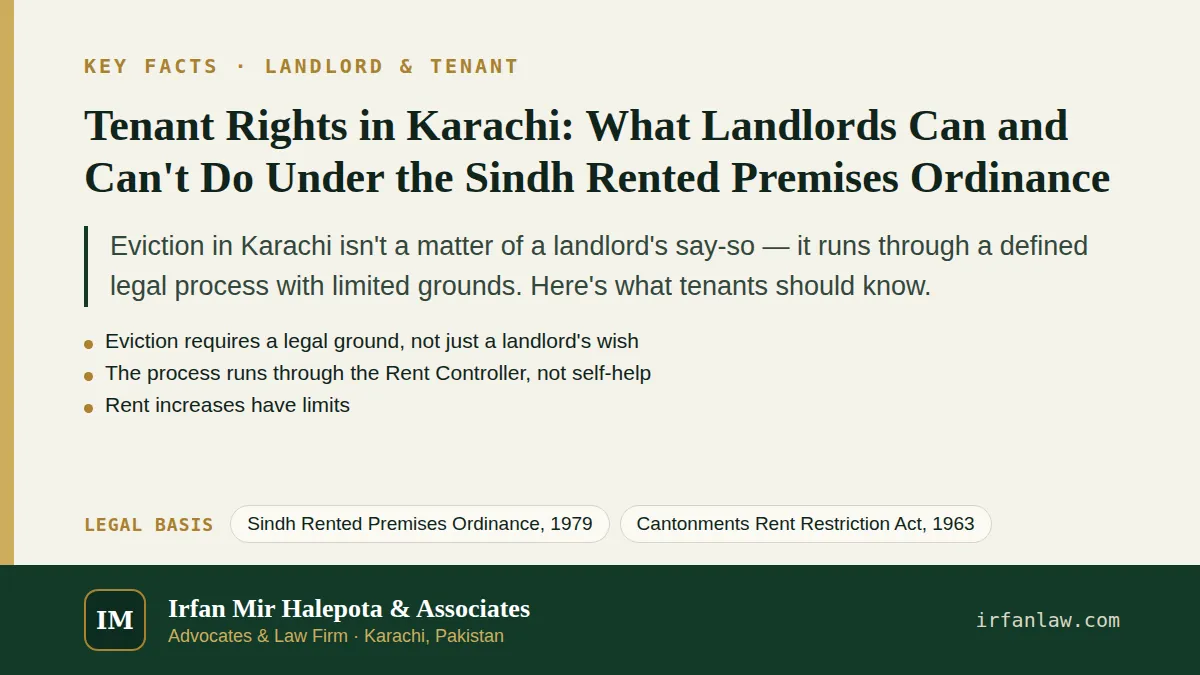
Eviction requires a legal ground, not just a landlord's wish
The Ordinance limits eviction to specific grounds: default in payment of rent, the landlord's genuine (bona fide) personal need for the premises, unauthorised subletting, or damage to the property, among others. A landlord who simply wants a tenant out — to raise the rent for a new tenant, for instance — still has to fit the case into one of these grounds and prove it before the Rent Controller.
The process runs through the Rent Controller, not self-help
Eviction is decided by the Rent Controller after a formal application and hearing — a landlord physically locking a tenant out, cutting utilities, or removing belongings without a court order is not a lawful eviction, regardless of the underlying dispute. Tenants facing this kind of pressure have legal recourse independent of the eviction question itself.
Rent increases have limits
Rent increases under the Ordinance are not unlimited or arbitrary — there are constraints on how and when rent can be raised, and disputes over what constitutes "fair rent" for a property can themselves be brought before the Rent Controller.
If you receive an eviction application
Respond within the timeframe set by the Rent Controller. Failing to appear or respond can result in an order against you by default, regardless of how strong your actual position might have been. We review the landlord's stated ground, whether required notices were properly served, and whether the application meets the Ordinance's requirements before advising on next steps.
A note on cantonment areas
Properties within Karachi's cantonment areas fall under a different law — the Cantonments Rent Restriction Act, 1963 — so the first question in any Karachi tenancy dispute is which law actually applies.
Follow us on Google
If these guides are useful, add this site as a preferred source. Google will then show it more prominently to you in Search, Discover and AI results.
Official sources
Common questions
Can my landlord evict me without going to court in Karachi?
No. Eviction of a tenant in Sindh must proceed through the Rent Controller under the Sindh Rented Premises Ordinance — a landlord cannot lawfully take physical possession without a court order, even where rent is genuinely in default.
What are valid grounds for eviction under Sindh tenancy law?
Common statutory grounds include default in rent payment, the landlord's bona fide personal need for the premises, and the tenant's material breach of the tenancy terms. Which ground applies changes the evidence required and the procedure that follows.
This article is general information about Pakistani law and procedure, not legal advice for any specific matter. If this touches on something you're currently facing, get in touch and we'll advise on your facts directly.